
















































Inicio de sesión
Your advantages:
- Du sammelst mit jeder Aktivität XPs. Gear up und erreiche den nächsten Rang!
- Übersicht über Deine Bestellungen und den aktuellen Bestellstatus
- Schnelle & komfortable Bestellung


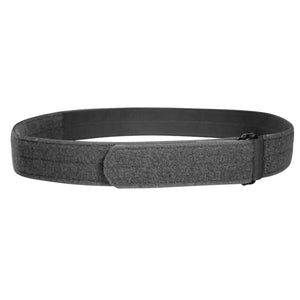
Every compass immediately indicates north with its needle and provides a new orientation within a second. Electronic compasses, such as those that are part of a GPS system, differ in this respect and must first be activated as a function. Determining a position with these methods can sometimes take considerably longer. Since a compass should always be readily accessible, purchasing a carrying case is recommended for easier use. These cases can be attached to a belt, for example, and their camouflage or solid-color designs can be adapted to different situations.
Anyone who wants to be able to check their compass at any time without explicitly holding it in their hand should use a wrist-worn version. These are not only integrated into many modern digital watches, but can also be worn directly on the wrist as a standalone compass without a watch.
The most important criterion when buying a good compass is its intended use. Those who use a GPS-based navigation device, for example for hiking or geocaching, can do without a separate compass. However, without electronic equipment, a classic compass, as an essential tool for orientation, should be easy to use and read immediately, which may necessitate attaching it directly to the body or safely storing it in luggage.
For night hikes in military settings or for scouting, compasses with integrated lighting are the right choice. Many models of this type now rely on discreet LED lighting, which is very energy-efficient and long-lasting. For an authentic assessment of direction with the finest nuances, the use of analog compasses is recommended, while compasses in electronic devices offer a more or less precise digital scale.
Whether the compass is worn on the wrist or attached to a carabiner or in a separate pouch depends on its intended use and personal preference. ASMC offers not only the right compass for all these options, but also the appropriate mounting accessories.
The simplest method for navigating areas in the northern hemisphere is to make use of nature. However, even here you have several options. We present a few tips. One method for determining direction without (technical aids), made famous by the Game of Thrones books, is to examine the vegetation on trees. Trees usually have more moss and lichen on one side of the trunk, indicating a shadier and therefore wetter side. Furthermore, there are usually fewer branch outgrowths on the same side, which are two indicators of the north side. The easiest way to check the number of branches is to look up the trunk from the bottom. Of course, moss is harder to see, or even invisible, in winter, which is why another tip applies: snow melts more quickly on the south side than on the north. In addition to navigating using nature, it's advisable to carry a two-way radio. In situations where natural clues are unclear, the radio device offers a reliable means of communication, whether for coordination within a group or for contacting the rescue control center in case of loss of orientation.
Such a device measures north using the Earth's magnetic field. A loosely mounted needle aligns itself towards north due to the Earth's magnetic field.
Whether hiking, running, cycling, skiing off-piste, canoeing, or sailing: to determine directions in unfamiliar terrain, a compass is the tool of choice. Whether for orientation during outdoor activities, the compass is the device of choice. Its biggest advantage over modern GPS devices is, of course, its independence from a power source. This is less of a concern on a weekend trip, but it can be crucial on a world tour or an extended break (sabbatical). You'll usually also need a (hiking) map, which you can then navigate much more easily with the help of a compass. By the way, a good collection of tips on map reading can be found here: http://www.kompass.de/magazin/kartenlesen.html
There are models adapted to specific conditions, but a simple bearing or marching compass should suffice for most purposes. Then there are digital compasses, so-called electronic "fluxgate" models. However, several factors come into play here that make their use more difficult, and of course, they require a power source. Compasses are also commonly used as underwater navigation devices.
You might remember this from childhood with the compasses you often received as gifts: you can't really hold them still. This has nothing to do with excessive coffee consumption or anything like that, but is due to the natural body tremors that everyone has. These tremors unfortunately cause a compass needle to vibrate easily. Of course, a model with a dampened and properly mounted needle helps prevent this.
First, you should determine what you intend to use such a device for—both now and in the future—and how much you're willing to spend. As mentioned above, it's also important to consider which hemisphere of the Earth—Northern or Southern Hemisphere—you'll be using the compass in, as different models are required for each (keyword: "Global System"). There are also sports watches with built-in compasses. If you only need a compass occasionally, and you're already a keen runner, for example, this might be a good solution.
There are various explanations for this (e.g., in astronomy), but in the case of standard compasses, it refers to the degree of deviation from true north. South, for example, would have an azimuth of 180°, with the angle measured clockwise.


Gratis Versand ab 99€
In 1-3 Werktagen mit DHL bei dir zu Hause

Ganz ohne Risiko
Top Bewertungen, geprüfter Shop & 31 Tage Zufriedenheitsgarantie

Flexibel zahlen
Zahle sicher und flexibel mit Paypal und Co

Treue wird belohnt
In der ASMC Prime League erhältst Du attraktive Rabatte
Pay securely with:


Secure shipping with:


