






Bundeswehr Original
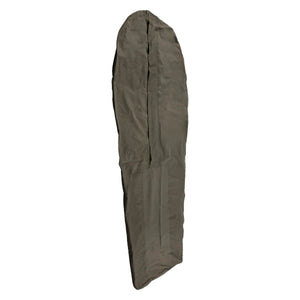
Used BW sleeping bag pad
12,60 €


A good sleeping spot is the foundation for restful sleep in the great outdoors – and thus for having energy the next day. It’s not just about the sleeping system itself, but also about choosing the right location and suitable weather protection.
Before deciding on a particular type of sleeping arrangement, you should study nature carefully. Depressions and hollows should be avoided, as water can collect there and cold air often accumulates. The ideal spot is level, dry and as free as possible from roots or sharp stones. Dead branches above the campsite also pose a risk, as they can fall in strong wind. Natural features such as rock ledges, dense bushes or larger stones can provide additional protection from wind and weather – but must always be chosen with care, for example due to the risk of rockfall in crevices or unstable overhangs.
Once you’ve found your base, your sleep setup should fulfill two key tasks: it must insulate against ground cold and ambient cold, and it should protect you from wind, rain or even snow. This can be achieved in many ways – using natural materials or gear you’ve brought along. In practice, various sleeping solutions and flexible protective setups have proven themselves, depending on the type of adventure.

In the bushcraft realm, the focus is on working with the simplest materials from your surroundings. A so-called forest bed – a thick layer of leaves, moss or grass – provides basic insulation and padding. Those seeking more comfort can build a frame from branches or even construct simple shelters. For building, you usually need a sharp knife, a folding saw or even a machete. Each of these tools has its strengths: saws are precise for cutting wood, machetes are efficient in dense vegetation, and a good bushcraft knife is extremely versatile.

The classic combination offers a proven compromise of comfort, pack size, and insulation. Sleeping pads come in many varieties – from foam to inflatable models to self-inflating mats. Sleeping bags are chosen according to temperature range and, combined with a good pad, provide solid sleeping comfort at a comparatively low weight.

Especially in wooded areas, the hammock is a space-saving and quick solution. It keeps the body off the cold ground and can easily be turned into a full sleeping setup with a mosquito net and a tarp. A good suspension and an insulation layer under the body are important, as the cold from below quickly becomes noticeable.
The BW-Zeltbahn (Bundeswehr shelter half) is a versatile classic among outdoor enthusiasts. Originally intended as part of military equipment, it can be used flexibly thanks to buttonholes and eyelets – whether as rain protection, bivy tarp, or simple shelter.
A particularly popular setup is the so-called “dachshund garage”: two shelter halves are pitched in an A-frame shape and fixed to the ground with pegs or natural materials. Usually, two tent poles are needed for the setup; alternatively, branches or trekking poles can be used.
This minimalist shelter offers protection from rain and wind and fits exactly one person with gear. Its camouflage color allows it to blend unobtrusively into the surroundings – ideal for discreet overnight stays in nature. Those needing a bit more comfort or space can combine several shelter halves into larger constructions.

For stationary camps and car camping, the camp bed offers increased sleeping comfort. It reliably keeps ground cold and moisture away and makes getting in and out easier.
Soft, comfortable, and versatile – air mattresses can be inflated to your preferred firmness and provide a pleasant sleeping surface. Modern self-inflating models are especially popular but must be protected from sharp objects. They are well suited for established camps and family tents.
This luxury variant combines height, stability and soft sleeping comfort. Particularly popular in the glamping sector, it offers almost hotel-like conditions. The downside: they are bulky and heavy, which limits transport.

A roof tent is mounted on the car roof and is particularly popular with overlanding and road-trip fans. It offers protection from ground moisture, animals and insects and can be set up and taken down in just a few minutes. The integrated mattress provides comfort – however, the downside is the dependence on the vehicle and the additional weight.
Effective protection against wind, rain and cold is essential to ensure a safe and comfortable overnight camp. Some basic considerations should be taken into account when choosing a location: the wind direction plays a crucial role. Ideally, the entrance to the sleeping area is positioned away from the wind so that wind and weather do not hit the sleeping spot directly. At the same time, the access should be chosen so you can leave the camp quickly in an emergency. Natural protection, such as rock ledges or dense vegetation, is helpful but should be carefully checked – especially for risks like rockfall or unstable structures.
For short overnight stays and good weather, additional protection can be omitted, making sleeping under the open sky a special experience. However, the weather can change at any time – sudden rain or strong wind are possible even on seemingly calm nights. Therefore, it is advisable to have at least an emergency solution like a tarp ready at hand. It is also important to set up camp well before dark. This leaves enough time to check the spot, implement protective measures, and set up the camp safely and thoughtfully.

Rock ledges, caves, or dense groups of trees can serve as natural shelter. However, special caution is required: animals may live in caves, and rock overhangs pose risks of falling rocks or sudden water ingress during rain. Still, with careful selection, such places offer effective weather protection.

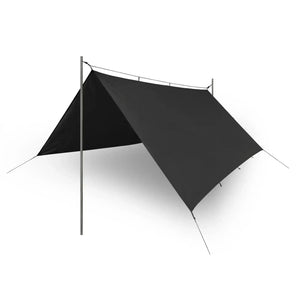
The tarp is a classic among outdoor enthusiasts: versatile, lightweight, and compact. With just a few cords and poles, it can be set up as a roof, windbreak, or tent substitute. Its open design ensures good ventilation – but you need to position it cleverly to be truly protected from the weather.

A tent offers all-around protection and is a safe choice, especially in unstable weather. From lightweight trekking tents to spacious family tents, there are options for every situation. Modern materials ensure good ventilation, waterproofing, and quick setup.

For longer stays or as a group tent, traditional dwellings like yurts, lavvus, or tipis offer a robust, weatherproof solution. They can be heated with a stove and provide a cozy indoor climate even in cold conditions. However, their setup is complex and transport correspondingly demanding.
Especially in the warmer months, insect protection can determine your sleep quality – and sometimes even your health. Mosquitoes and other insects are almost impossible to avoid in nature, but with the right equipment you can protect yourself effectively. A hammock with integrated mosquito net is ideal especially in humid or tropical areas. Tents with a closable inner tent also offer reliable protection from insects. Anyone sleeping in a sleeping bag under the open sky should make sure that the sleeping bag can be closed completely, ideally with an integrated insect net in the head area. For additional protection, a separate mosquito net can be stretched over the sleeping area.
If you want to spend the night in the wild, you should not only pay attention to your gear and choice of location, but also know the legal regulations – as these can differ significantly from country to country.
In Germany, wild camping is generally prohibited, as forests and meadows are usually privately or municipally owned. Pitching a tent outside official campsites is therefore not allowed. An exception is so-called bivouacking – spending the night without a tent, for example with just a sleeping bag and tarp. This is also legally disputed, but is tolerated in many regions as long as no traces are left behind and people behave considerately. An emergency bivouac, for example in danger due to a sudden change in weather or exhaustion, is permitted but only applies in genuine emergencies.
In Austria, wild camping in forests is generally prohibited and is only allowed on alpine pastures with the owner’s permission. In the mountains, bivouacking is occasionally tolerated, but should first be coordinated with the authorities or local alpine clubs. Regulations vary from one federal state to another.
In Switzerland, wild camping above the tree line is permitted in many regions as long as no protected areas are affected. Camping in the forest or on private land is only allowed with permission. The same applies here: bivouacking is often tolerated if no traces are left behind.
The regulations are particularly liberal in the Scandinavian countries. In Norway, Sweden and Finland, the so-called right to roam applies. It allows everyone to move freely in nature and to spend a night there with a tent or bivy bag – as long as you keep sufficient distance from residential buildings and show consideration for nature.
Anyone traveling in other countries should definitely inform themselves in advance about the applicable laws. Even if bivouacking is often seen as harmless, violations of local regulations can result in fines.
Whether minimalist in the forest or comfortable in a tent – the best sleeping setup comes from the right combination of sleeping pad and weather protection. Those who observe their surroundings carefully and take natural conditions into account can build a safe and cozy camp with the simplest means. Experience, equipment and improvisation skills play just as big a role as planning and preparation.
Which sleep setup is your favourite? Share your opinion in the comments!


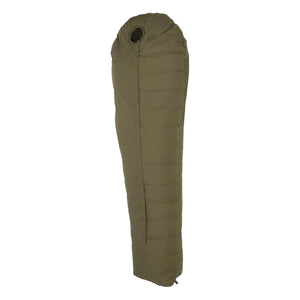
Sleeping Bag Defence 4


Shipping to Almost Everywhere
Shipped to you within 1–2 business days

Completely risk-free
Top reviews, certified shop & 31-day satisfaction guarantee

Pay flexibly
Pay securely and flexibly with PayPal and more

Loyalty is rewarded
In the ASMC Prime League, you'll receive attractive discounts
Pay securely with:


Secure shipping with: