









Bushcraft
The term bushcraft was first used by Mors Kochanski. He is a Canadian survival instructor and naturalist who has published numerous books in the past. His first book on outdoor skills and wilderness was titled Bushcraft, which ultimately gave this scene its name. If you break down the book title, it consists of the two words “bush” and “craft”. Translated, this means woodland craft and is a popular hobby for many nature enthusiasts.
Bushcraft is fundamentally about living in nature and making yourself as comfortable as possible in the wilderness. The focus is primarily on working with natural materials. The aim is to learn specific skills that allow you to provide for yourself in the wild without extensive equipment.
What is the appeal of bushcrafting?
Anyone who loves being out in nature is bound to really enjoy bushcrafting. It’s about pushing and challenging yourself, for example. The focus is on learning various skills and techniques that enable you to survive in the wild. At the same time, woodcraft is also a source of calm for many bushcrafters: a place where they can forget everyday stress and focus entirely on the here and now. Watching animals, making fire and roaming through the forest are simply great ways to switch off and recharge your batteries.
What you should bring for bushcrafting!
The most important thing here is first and foremost an interest in living in nature. To learn quickly and grow from your experiences, you should bring plenty of curiosity and be willing to try different things. This will naturally be reflected in your attitude: when you are out in the forest, you shouldn’t be afraid to get dirty or to get stuck in! When bushcrafting, you leave your comfort zone and have to fully embrace what nature provides for you. In addition, some techniques naturally require a certain level of manual skill. But the most important thing is to enjoy what you are doing!
Bushcraft is not the same as survival!
Survival training is about learning life-preserving measures that you can apply in an emergency. Here the focus is on pure survival, whereas bushcraft is more about escaping everyday life and becoming one with nature.
Unlike survival, many bushcrafters head out into nature to challenge themselves. The focus here is on the joy of living in harmony with nature and learning various techniques such as making fire or purifying water. At their core, the individual skills are very similar, so the intention behind them is really the only true difference between these two concepts.
If you are interested in survival, you should definitely check out this link. Here we have compiled a wealth of information for you on surviving in the wild.
This belongs in your gear!
Strictly speaking, you don’t actually need anything for bushcrafting. The appeal lies in making do with what you find in nature. The primary aim here is to challenge yourself to use only what the wilderness provides.
Exactly what you should pack therefore depends heavily on the demands you place on yourself. So that you’re not completely on your own in the wild and can make things as comfortable as possible, the following items shouldn’t be missing from your bushcraft gear:
Knives
An absolute must-have in bushcraft gear is a good knife. Of course, “good” is once again a stretchy term that leaves plenty of room for interpretation. Which version is right for you depends very much on what you want to do with your knife.
A good choice for bushcraft is a full-tang knife. Here, the blade runs continuously to the end of the handle, which makes it particularly robust. This makes it one of the strongest fixed-blade knives and far superior to its competitors in terms of durability. The ideal blade length for bushcraft is between 10 and 12 centimetres.
A Scandi grind is also particularly practical for outdoor use. Thanks to the strong blade, it is especially well suited for carving and is easy to resharpen. Among bushcrafters, the ergonomically shaped knives from Morakniv are particularly popular. The traditional Swedish brand stands for absolute durability and a high level of practical usability. If you’re still missing the right knife for your kit, you can find Morakniv’s top sellers via this link Morakniv top sellers
Sleep equipment
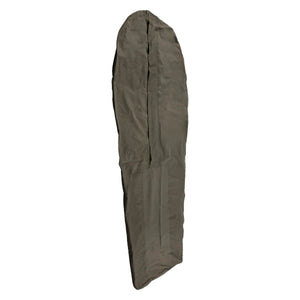
For more comfort in nature, you naturally also need the right sleeping equipment in your kit. Depending on your needs, a sleeping pad and a warm sleeping bag are perfectly adequate for bushcrafting. As a sleeping surface, the Bundeswehr “elephant skin” is also a good choice, for example. This groundsheet doesn’t let moisture through and also protects you from sharp stones or sticks. You can find the BW elephant skin in original Bundeswehr quality here
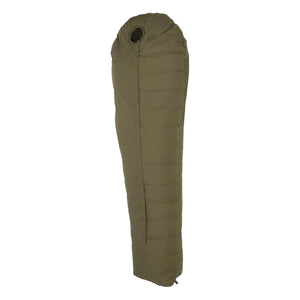
Depending on the weather, you should definitely carry a suitable sleeping bag with you. Bestsellers in this area include the robust and proven products from Snugpak and Carinthia. They all score with high thermal performance and protect you reliably in all weather conditions. In our shop category “Sleeping bags” you’ll find over 100 models to choose from so you can pick the one that’s right for you -> Schlafsäcke
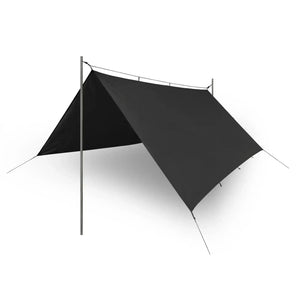
In addition, for optimal weather protection we recommend a robust tarp that keeps you dry on rainy days. This way you are as well protected as possible and can fully enjoy your time in nature. Our tarps also come in many different versions so you can choose the one that best suits your gear. Tarps from ASMC
Water purification
Of course, water purification is also an important point you should keep in mind when bushcrafting. In addition to suspended particles and bacteria, most bodies of water contain numerous microorganisms that can cause health problems if consumed unfiltered. For this reason, you should always boil and treat water from rivers or streams before drinking it.
Because the topic of water purification is so extensive, we’ve published a separate article on it. Here you’ll find everything about water disinfection and learn how to obtain drinking water on the go.
Outdoor stoves
Since open fires are prohibited in our forests, you should also carry a stove with you on longer tours. There are countless options that allow you to quickly and easily prepare a hot meal on the go. Hobo stoves are particularly popular among bushcrafters. With them you cook over a real flame without having to carry fuel with you. They only need brushwood, sticks or twigs, which you can find in abundance in nature. In addition, there are also practical gas, alcohol or petrol stoves to choose from. You can find an overview of our outdoor stoves for bushcrafters here.
Fire starter
If you don’t master techniques like the bow drill, you should definitely pack a fire starter in your gear. They guarantee that you can make a small fire anywhere and in any weather. Here too, there are countless variants for getting your tinder to ignite. We’ve also compiled all the information on ferro rods and making fire for you in a separate article. There you’ll find useful tips on the subject and a selection of our bestsellers that will reliably accompany you on every adventure. Feuerstahl
First aid kit
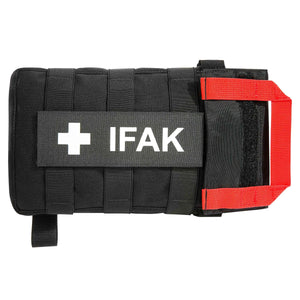
Whether it’s tripping hazards, sharp-edged rocks or carelessness with a knife – accidents happen quickly outdoors. All the more important, then, that you carry a small first-aid kit you can fall back on in an emergency. Here you’ll find various complete kits that contain everything that matters in a critical situation.
First-aid kits for emergencies
We’ve now reached the end of our bushcraft packing list. Of course, you can expand it with your personal gear depending on your needs and preferences. But let’s be honest: the focus in bushcraft is the challenge of getting by with as little equipment as possible, which is why you should avoid overly extensive gear. If you still have questions about bushcraft equipment, our customer service is always on hand with help and advice. With that in mind, we already wish you lots of fun on your next adventure!
Bushcraft skills at a glance
Bushcraft is a very broad topic in which outdoor enthusiasts acquire various techniques and skills. In summary, it’s about fully immersing yourself in nature and making do with what you find there. There is, of course, a whole wealth of knowledge that bushcrafters acquire over time.
As already mentioned, for example, making fire is an important part of bushcrafting. There are countless methods to ignite your tinder without the usual aids such as lighters or matches. From fire drilling or sawing to the use of various everyday objects, there are virtually no limits! The best-known method for making fire, however, remains the classic fire starter. With it, you are able to light a warming campfire anywhere and in any weather.
In addition, water treatment is of course also an important factor. Here too, there are various methods that allow you to find drinkable water in almost any location. To ensure you are optimally prepared for your next adventure, we have added many different water purification products to our range. You can find our bestsellers from this product category here.
Many bushcrafters also focus on navigation. Especially when searching for a water source, it’s important that you can read the terrain. Beyond that, of course, being practiced in using a compass and map always helps you reach your destination quickly and without detours.
Of course, food also plays an important role in bushcraft. For example, you should acquire knowledge about what you can safely eat from nature. From animal emergency food to plants and herbs, there are many things you can live on in the wild. You’ll find plenty of information on these topics in our books on survival and bushcraft. They serve as guides that help you acquire the necessary knowledge in the shortest possible time. Another interesting topic many bushcrafters are involved with is hunting. Many already hold a hunting licence and combine this passion with bushcraft.
Finally, at the end of the day you should of course also be able to set up your camp for the night. From a hammock to a classic shelter, there are no limits to your options here either. However, note that both fall under bivouacking and therefore occupy a legal gray area. Camping in a tent, on the other hand, counts as wild camping, which is prohibited in Germany.
Questions: Bushcraft
What am I legally allowed to do in the forest?
As already mentioned, there are some restrictions in our forests. For example, wild camping is strictly prohibited. You are also not allowed to light open fires in nature, as this massively increases the risk of forest fires.
Bivouacking, on the other hand, occupies something of a legal gray area. This includes, for example, spending the night in a self-built shelter or your hammock. Schleswig-Holstein is a special exception, however. There, entering the forest after dusk is completely prohibited, which means that bushcrafting and bivouacking are not possible there either. You should therefore familiarize yourself thoroughly with the regulations in your region and read up on the legal situation.
Basically, the same applies here: if you behave calmly and respectfully, you are more likely to encounter tolerance when bushcrafting than the opposite!
What makes a professional bushcrafter?
Mors Kochanski countered this exact question with the answer: “The more you know, the less you carry.” This simply means that a professional bushcrafter needs far less gear than a beginner thanks to their extensive knowledge. In this respect, it is the wealth of experience that makes a professional bushcrafter – someone who is able to provide for themselves in any situation with an absolute minimum of equipment.
As an example, we would like to briefly look at the hand drill. If you are able to make a fire using only natural materials, you can do without a fire starter. Even though this only makes up a tiny fraction of your gear, you can apply this example to many other items.
An experienced bushcrafter therefore manages with a very minimal kit and, thanks to their extensive skills, still knows how to help themselves in any situation.
What should I keep in mind as a bushcraft beginner?
There really isn’t much you absolutely have to keep in mind here. It is of course important to treat nature with care and behave quietly so as not to frighten the animals. Open fires and wild camping with a tent are an absolute taboo in the forest.
Otherwise, the basic principle for learning all skills here is “learning by doing”. Your wealth of experience grows as you try new approaches. By gradually feeling your way forward and experimenting several times, you gain valuable experience that helps you progress.
And if things don’t go quite as you imagined, you can simply do better next time! If you’re new to bushcraft, we recommend one of our top books on the subject. The authors cover various topics that will help bring you a step closer to your goal of becoming a bushcrafter.


