





ASMC
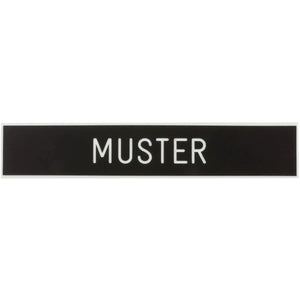
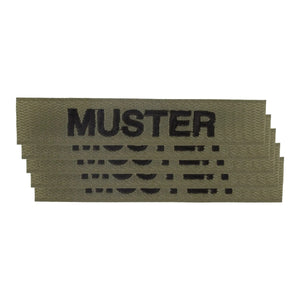
Name tapes set of 5 olive
from 7,55 €
from 6,42 €


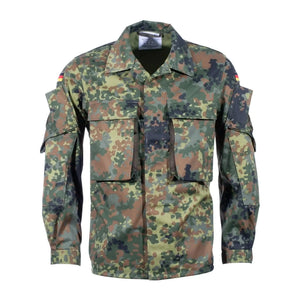
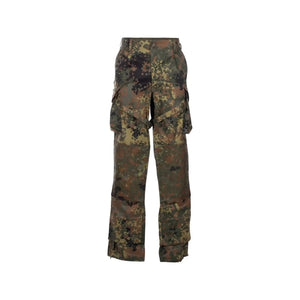
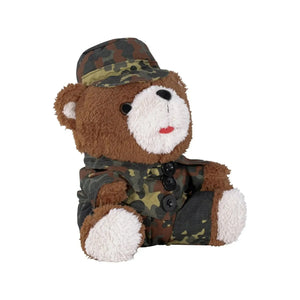
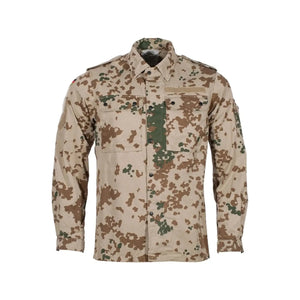
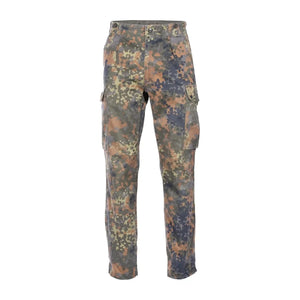
Flecktarn is the name of the current camouflage pattern of the Bundeswehr, where it has been used by the army, air force and navy since the early 1990s.
The current Flecktarn pattern was introduced across the Bundeswehr in the early 1990s. However, the development history of the pattern dates back to the 1930s, as the original principle was developed by Johan Georg Otto Schick in 1935. This was also the first unit to be equipped with Flecktarn patterns from 1938 onward. Over time, several variants and further developments emerged, such as the pea pattern and the oak leaf pattern. In the 1950s, Flecktarn was once again used in the development of the European EVG uniform. However, the project did not prevail. Instead, the Bundeswehr introduced the Splittertarn M31, followed by the olive-colored uniform in the 1960s.
It was not until the 1970s that new attempts were made to develop a camouflage pattern. When various five-colour patterns were compared, “Flecktarn B (large)” was ultimately selected, which corresponded to today’s Flecktarn. For political and financial reasons, the pattern was not introduced at first. It was not until the late 1980s that the pattern reappeared in the form of the “Kampfanzug 90”. At the end of February 1991, Flecktarn began to be introduced across units within the Bundeswehr.
Use outside Germany: Besides the Germans, only the Belgian armed forces used the “Flecktarn B (large)” pattern. In 2000 it was replaced there by what is now known as puzzle or jigsaw camouflage. Apart from that, Flecktarn is only used by a few other units, such as Belarusian police and militia units.
Camouflage effect: During the first ten years after its introduction, the Flecktarn pattern was considered one of the best camouflage patterns for wooded terrain due to its very good camouflage effect. However, over time the demands on camouflage patterns have evolved towards more durable and adaptable camouflage that allows adjustment to terrain and light conditions.
Variants: A well-known variant of today’s flecktarn pattern is the desert camouflage that is often incorrectly referred to as tropical camouflage. It is a three-color camouflage pattern for dry regions that was also used in operations in Afghanistan. The winter camouflage pattern currently in use, however, is not related to flecktarn. It consists of only a few frayed spots on a white background. Further variants of the flecktarn pattern are currently in development. These include, for example, a true desert camouflage pattern for vegetation-free deserts, a mountain flecktarn for rocky landscapes and high mountains, and a variant for riverbank areas.
In its standard variant, Flecktarn is suitable for wooded regions. The Tropentarn variant, on the other hand, can be used in deserts, desert-like regions, sparse forests and steppes to achieve the highest possible camouflage effect there as well.
Flecktarn in its current form was developed by the Bundeswehr.


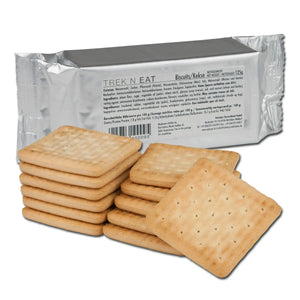
Trekking biscuits


Name tag plastic


Cold-weather protection jacket HIG Jacket Spezialkräfte


BW insignia with Velcro

Mess kit Camp-A-Box 2-piece olive

Emergency Ration NRG-5


Energy Caffeine Milk Chocolate 100 g

Used BW sleeping bag pad


Shipping to Almost Everywhere
Shipped to you within 1–2 business days

Completely risk-free
Top reviews, certified shop & 31-day satisfaction guarantee

Pay flexibly
Pay securely and flexibly with PayPal and more

Loyalty is rewarded
In the ASMC Prime League, you'll receive attractive discounts
Pay securely with:


Secure shipping with: