





ASMC
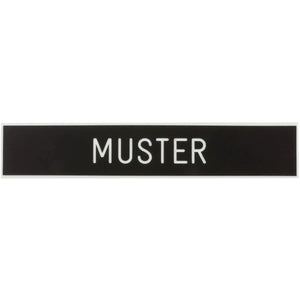
Name tapes set of 5 olive
from 7,55 €


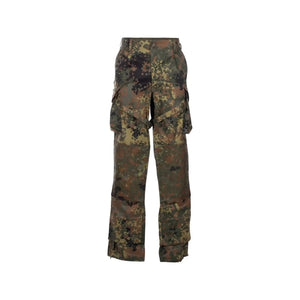
Woodland is a four-color camouflage pattern that was used by the U.S. armed forces until 2006. Other designations are M81 Woodland and U.S. Woodland. The pattern was used by the Marines (USMC) as well as by the air forces (U.S. Air Force) and the navy (U.S. Navy).
The direct predecessor of this camouflage was the ERDL pattern, which was developed in 1948. As it was further developed, the pattern was enlarged and the individual color blobs and their edges were redrawn to make them appear more irregular overall. These adjustments adapted the camouflage pattern to deployment areas where combat usually takes place at shorter distances (e.g. Vietnam). Today’s camouflage is based on four colors and is therefore also known as 4 Color Woodland.
With the U.S. Marines, this camouflage pattern was used until 2002, when it was replaced by the more modern MARPAT. Nine years later, however, it was reintroduced for use in Afghanistan by the United States Marine Corps Forces Special Operations Command (MARSOC).
In the U.S. Army, Woodland was still in use until 2004. It was then replaced by the Universal Camouflage Pattern (UCP), also known as DigiCam. An exception are the United States Special Forces (Green Berets), for whom the pattern was only recently reintroduced. In the U.S. Navy, its use is reserved for certain units such as the U.S. Navy SEALs. Within the U.S. Air Force, it was still in use until 2011, when it was replaced by the Airman Battle Uniform. In addition, the camouflage pattern is also used by non-military units in the USA, such as SWAT teams.
In addition to the standard pattern, there is also so-called Digital Woodland, a pixelated variant of the original. However, Digital Woodland is considered a variant of the MARPAT camouflage pattern and is therefore also referred to as MARPAT Digital Woodland.
The camouflage pattern was originally developed for areas where combat is primarily carried out at close range. These include, for example, forests and other regions with dense vegetation such as jungle. At the time of development, Vietnam was used as a reference for this.
The camouflage pattern was developed by the US armed forces. However, it has been used in the same or a similar form by the armed forces of several countries worldwide, in some cases to this day. These include, for example, Cambodia, Croatia, Italy and South Korea. Some countries such as China, Guatemala or France have independently developed their own camouflage patterns that are very similar to the original and are therefore also counted as part of the “woodland family”. Today, the pattern is one of the most widely duplicated and modified camouflage patterns in the world.


Shipping to Almost Everywhere
Shipped to you within 1–2 business days

Completely risk-free
Top reviews, certified shop & 31-day satisfaction guarantee

Pay flexibly
Pay securely and flexibly with PayPal and more

Loyalty is rewarded
In the ASMC Prime League, you'll receive attractive discounts
Pay securely with:


Secure shipping with: