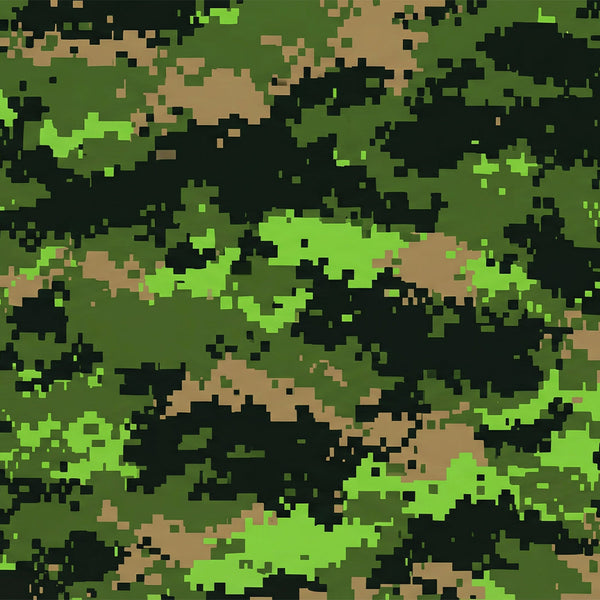
When it comes to modern camouflage patterns, the name CADPAT quickly comes up. The Canadian Military Pattern revolutionized the way soldiers are camouflaged in the field in the 1990s. Unlike traditional blotch or stripe patterns, CADPAT is based on a digital, pixelated design that optimally breaks the body’s contours in wooded and urban environments.
CADPAT: From Design to Implementation
CADPAT, short for Canadian Disruptive Pattern, was specifically developed for the Canadian Armed Forces. The goal was to create a camouflage pattern more effective than traditional designs, especially in mixed Canadian woodland areas. After extensive field testing, CADPAT was officially introduced in the late 1990s – today it is considered one of the first digital camouflage patterns worldwide.
CADPAT Variants
The CADPAT pattern comes in several variants depending on the operational environment:
-
CADPAT TW (Temperate Woodland): The classic green-brown version for forests and mixed landscapes.
-
CADPAT AR (Arid Regions): Sand and brown tones for deserts or dry areas.
-
CADPAT LT: Experimental versions and special patterns for specific requirements.
The digital pixel structure ensures that soldiers are harder to detect even at a distance, as the body’s outlines blend better with the surroundings.
CADPAT in Use: Where and How It’s Worn
Soldiers of the Canadian Armed Forces use CADPAT on jackets, trousers, helmets, and gear. Its adaptation to different environments allows them to operate flexibly in woodland, desert, or urban terrain. CADPAT has also gained popularity outside the military – airsoft players, paintball enthusiasts, and outdoor fans use the digital pattern for camouflage and style.
What Makes CADPAT Special
- CADPAT was the first digital camouflage pattern to be officially introduced.
- The pixel camouflage “breaks” the human silhouette more effectively than traditional patterns.
- Many soldiers report that CADPAT is especially effective in leafy and mixed forests.
CADPAT Compared to Other Camouflage Patterns
CADPAT was not just a breakthrough for Canada. It inspired the development of MARPAT, the digital pattern of the US Marines, which is also pixel-based. For those interested in learning more about digital and traditional camouflage patterns and their strategic use, see our blog post “Using Camouflage Patterns Strategically”. Compared to traditional blotch patterns, CADPAT offers advantages in camouflage at medium and long range and in varied terrain.
Overview of CADPAT
CADPAT remains a milestone in modern camouflage. The new Multi-Terrain (MT) version improves concealment in various environments and demonstrates how digital patterns can be further developed. For soldiers, outdoor enthusiasts, and collectors, CADPAT is an innovative example of effective camouflage.