Camouflage M90: Sweden’s camouflage pattern
M90 is the characteristic camouflage pattern of the Swedish armed forces. Developed for the Nordic forests and the mixed landscapes of Scandinavia, it is considered a particularly effective pattern for highly structured environments and forms the basis for several M90 variants.
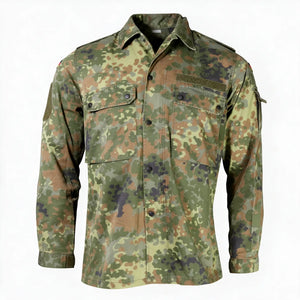
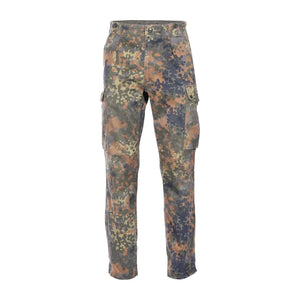
The camouflage pattern is characterized by its striking, angular shapes, which optimally break up soldiers’ outlines in the field and make them hard to detect. M90 is a key element of Sweden’s military equipment and is used in training and operations alike to reduce visibility and secure tactical advantages.
M90 history: development and introduction in Sweden
Today’s M90 camouflage pattern was developed in the late 1980s and was introduced across the Swedish armed forces in the early 1990s. The aim was to create a modern pattern specifically adapted to Nordic vegetation and light conditions.
Unlike classic spot patterns such as the Flecktarn pattern, M90 relies on hard geometric shapes. This angular structure breaks up the silhouette particularly effectively. With the introduction of the Stridsuniform 90, the pattern became standard and has since shaped the appearance of the Swedish army.
Areas of use and camouflage effect: How Sweden uses M90
M90 was developed specifically for wooded and mixed terrain in Scandinavia and is considered highly effective due to its geometric shapes. With increasing operational experience, the Swedish armed forces further refined the concept: robust, functional, and optimized for changing light conditions.
The color palette of dark green, light green, black and an earthy brown is based on typical Scandinavian forest landscapes. This allows the uniform to blend particularly well into mixed forests, mossy ground and rocky woodland such as those found in many regions of Sweden.
Outside Sweden, the pattern is only used to a limited extent, but it enjoys considerable international attention. It is particularly popular in the airsoft and outdoor sector thanks to its distinctive design.
M90 variants: winter, desert and more
Known M90 variants include M90 Winter, which is designed for snowy regions. There are also lighter adaptations for drier areas. All variants follow the typical angular design that helps break up and visually dissolve outlines.
Other camouflage patterns such as Woodland, Multicam and MARPAT follow different camouflage strategies but are often compared internationally with M90.
Modern developments of the M90

Even though the classic M90 camouflage pattern is still in use, the Swedish armed forces are continuously working on improving the materials and cuts of their gear. The basic principle of the angular pattern remains unchanged.
Compared to many modern multi-terrain patterns, Sweden deliberately relies on strong specialization for Nordic environments.
This makes M90 exemplary of Swedish camouflage philosophy: clear shapes, high functionality and consistent adaptation to the area of deployment.
If you want to learn more about digital and classic camouflage patterns and how to use them in a targeted way, take a look at our blog post Using camouflage patterns strategically.
FAQ – Everything you need to know about the M90 camouflage pattern