







NfD
BW Commando Beret
from 25,20 €
from 13,44 €


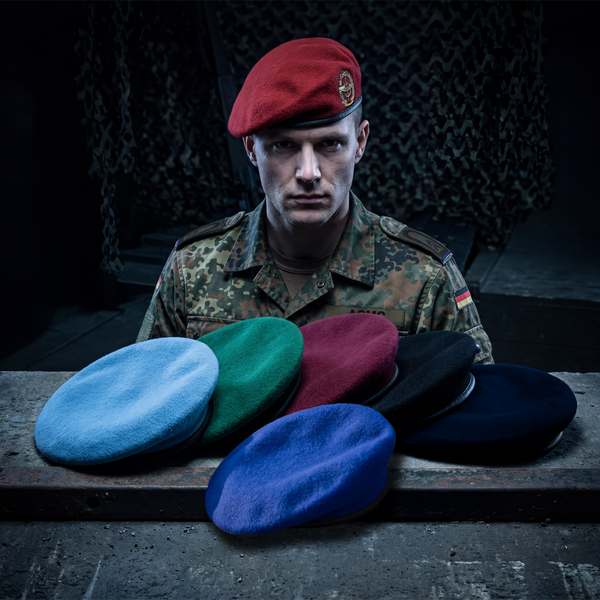
The color of a beret is more than just a visual feature – it stands for affiliation, specialization and area of deployment within the armed forces. A closer look quickly reveals: behind every color lies a clear military meaning and a long tradition.
In this article, we take a structured look at the most important beret colors and explain which branches of service they represent. From paratroopers to armored units – each unit has its own identity, which is also reflected visually.
The beret did not originate in the military, but in civilian clothing in Europe. As early as the 15th and 16th centuries, it was worn primarily in France and Spain as a simple, round wool cap. It was easy to make, practical and could be used in many ways.
In a military context, the beret appeared significantly later. The first units began using it in the 19th century, primarily where a flexible, close-fitting headgear was required – for example in cramped vehicles or during missions involving a lot of movement.
However, the beret only acquired its current significance in the 20th century. In particular, the British and French armed forces introduced it specifically for certain units. This also led to the development of the system of color coding, which made it possible to clearly distinguish between different units.
In the Bundeswehr, the beret was finally standardized and introduced from the 1970s onwards and developed into a fixed component of the uniform – especially in the Army. Since then, it has served not only as headgear, but above all as a visible sign of unit affiliation and function.
Berets are mainly worn by army soldiers of the Bundeswehr, but they are not assigned exclusively to a single branch; in some cases they are worn by several units. For example, mountain infantry wear mountain caps instead of berets. In the Air Force and the Navy, berets are also not worn, except by infantry-type units such as the air force security forces and the navy’s combat swimmers.


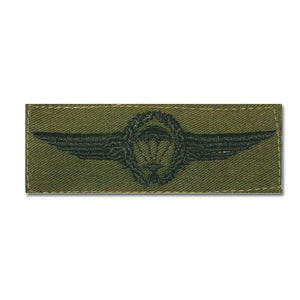
Berets and beret badges are far more than just part of the uniform – they serve as a clear identifying feature within the armed forces and stand for affiliation, role and specialization. In particular, the combination of color and badge allows for quick visual identification of the respective unit.
The various beret colors of the Bundeswehr are directly assigned to the respective branches of service and make the area of responsibility of the soldiers immediately recognizable. They are complemented by the beret insignia, which were officially introduced in 1971 and describe the respective unit in even more detail.
From paratroopers and light infantry to armored units – every beret and every insignia has a clear meaning and is part of a unified military system. This creates a clear structure that is shaped both by function and tradition.
At first glance, Bundeswehr berets hardly differ – in reality, the difference lies not only in their meaning, but also in how they are worn and how they are used in practice.
The classic BW beret primarily serves to make affiliation with a specific branch of service visible. Its color and badge clearly show whether a soldier belongs, for example, to the armored troops, light infantry or medical service. The shape and construction are largely standardized and designed for a neat, representative appearance.
A so-called commando beret, as worn by specialized units, is created less by strict regulations than by practice. These berets are often worn more tightly, individually adjusted and appear overall more compact. As a result, they sit more securely on the head and slip significantly less, even during movement.
This difference becomes particularly noticeable in the field: while classic berets sit a bit looser and have more “drape”, the tighter fit of commando berets provides better hold and functionality.
There is no separate, officially defined “commando beret” variant in the Bundeswehr. The differences arise instead from the way it is worn, individual adjustments and the requirements of the respective unit. The term is therefore used colloquially and describes style and use rather than a fixed design.
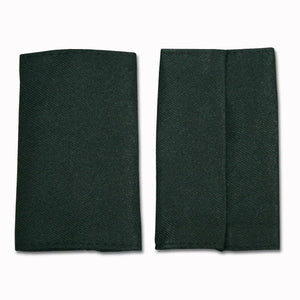
The branch colors of the Bundeswehr serve – similar to beret colors – to visually assign different branches of service. They are used on uniform elements such as collar patches or braids and make affiliation with a unit immediately recognizable.
Their origin goes back to traditional military identification systems that were already used in earlier armies to quickly distinguish between different units. With the establishment of the Bundeswehr, this system was further standardized and adapted to modern structures.
The reason for the wide range of different colors lies in the clear structure of the armed forces: each branch has its own role – from combat troops and support units to specialized areas such as medical services or logistics. The color serves as a simple visual means of identification.
| Branch of service | Color | Special feature |
|---|---|---|
| Artillery troops | Scarlet red | Supports combat with indirect fire |
| CBRN defense troops | Bordeaux red | Protection against nuclear, biological & chemical hazards |
| Armored troops | Pink | Mechanized combat troops in direct engagement |
| Army reconnaissance troops | Golden yellow | Reconnaissance and information gathering in the area of operations |
| Military police corps | Orange | Military police and security duties |
| Signal Corps | Lemon yellow | Ensuring communication |
| Light infantry / paratroopers / mountain infantry | Ranger green | Light infantry for mobile operations |
| Logistics troops | Light blue | Supply and logistics in the field |
| Medical service corps | Dark blue | Medical care for soldiers |
| Army aviation corps | Light grey | Air mobility and transport support |
| Engineer troops | Black | Construction and technical support in the field |
| Military music service | White | Representation and ceremonies |
| Air Force uniformed personnel | Golden yellow | Administrative assignment to the Air Force |
Beret colors indicate the general affiliation with a branch of service or a larger formation and can in some cases be worn by multiple units. Branch colors, on the other hand, are usually clearly assigned to a specific branch of service and allow for a more precise distinction within the Bundeswehr.
In addition to the color of the beret and the branch colors, the beret insignia also play an important role within the armed forces. They complement the respective unit affiliation and make it immediately visible which unit or function within this structure a person belongs to.

Beret colors are a key distinguishing feature within the Bundeswehr and serve far more than just visual differentiation. At a glance, they indicate affiliation with a specific branch of service and thus reflect the role, training and operational area of the respective soldiers.
In contrast to other color-coding systems such as the branch colors, which provide additional differentiation at the level of individual units, the beret serves as an overarching symbol of affiliation with larger formations and specializations within the armed forces.
This system is complemented by the beret insignia, which define the respective affiliation even more precisely. They are attached directly to the beret and, through their symbols, indicate the specific branch of service or function within the unit. This creates an additional, detailed level within military identification that usefully complements the interplay of color and insignia.
In this way, beret colors combine tradition, identity and military structure in a clear visual system. They make the diversity of the Bundeswehr visible and at the same time show how closely organization and symbolism are linked.


BW commando beret import


French beret


Shipping to Almost Everywhere
Shipped to you within 1–2 business days

Completely risk-free
Top reviews, certified shop & 31-day satisfaction guarantee

Pay flexibly
Pay securely and flexibly with PayPal and more

Loyalty is rewarded
In the ASMC Prime League, you'll receive attractive discounts
Pay securely with:


Secure shipping with: