






































Login
Your benefits:
- Du sammelst mit jeder Aktivität XPs. Gear up und erreiche den nächsten Rang!
- Übersicht über Deine Bestellungen und den aktuellen Bestellstatus
- Schnelle & komfortable Bestellung


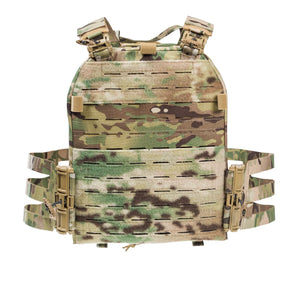
The Multi Terrain Pattern (MTP) is the modern camouflage pattern of the British armed forces and was developed to effectively conceal soldiers in different operational environments. As a versatile digital camouflage pattern, MTP combines elements for woodland, desert and transitional areas and is now one of the best-known military camouflage systems worldwide.
The MTP camouflage pattern was introduced by the British armed forces in the late 2000s. The goal was to replace the older DPM (Disruptive Pattern Material), which had been optimized primarily for European woodland. With increasing overseas deployments—especially in Afghanistan—there was a need for a more flexible camouflage pattern.
The result was the British camouflage pattern MTP, which first entered widespread service in 2010. During development, particular emphasis was placed on creating a pattern that works in as many types of terrain as possible, without having to switch between different uniform types.
MTP is a multi-terrain camouflage system that combines various color and shape elements to effectively break up the wearer’s outline. Typical features of the pattern are:
In contrast to purely digital pixel patterns, MTP camouflage uses a hybrid structure that provides good concealment both at close range and at a distance.
The MTP camouflage pattern is now used as standard by the British armed forces, including:
Its strength lies in its versatility. The pattern works particularly well in:
Thanks to this multi-terrain approach, soldiers need to switch between different camouflage patterns far less often.
Before the introduction of MTP, the British armed forces mainly used the DPM (Disruptive Pattern Material) camouflage pattern. This was highly optimized for European woodland areas and used comparatively large color blocks. However, in dry or desert-like regions, DPM showed clear weaknesses and offered only limited camouflage performance there.
The Multi Terrain Pattern (MTP) is a consistent further development of British military camouflage. It combines digital and organic color structures and enables soldiers to achieve flexible camouflage in a wide variety of operational environments. Thanks to its versatility, troops need to switch between different uniforms less often, which simplifies logistics and increases operational readiness. In addition, MTP ensures that soldiers are equally well camouflaged in different climate zones and types of terrain, thereby improving safety on missions.
Wer mehr über digitale und klassische Tarnmuster sowie deren gezielten Einsatz erfahren möchte, kann sich unseren Blogbeitrag „Tarnmuster gezielt einsetzen“ ansehen.
MTP combines camouflage for woodland, desert and transitional areas in a single pattern. This means soldiers need to switch between different uniforms less often, and the camouflage works more effectively in a wide range of operational environments.
MTP is the standard camouflage pattern of the British armed forces, but is also used by other countries as a model or in special cooperation projects.
MTP combines digital elements with organic-looking color areas. This makes it effective at both short and medium distances without the typical “pixel” outlines of purely digital patterns.
Especially on overseas deployments in Afghanistan and similar arid, steppe-like or transitional regions, MTP was able to significantly improve camouflage effectiveness.
The standard version is used by the British Army and the Royal Marines, but minor adjustments can be made for special forces or specific missions.


Shipping to Almost Everywhere
Shipped to you within 1–2 business days

Completely risk-free
Top reviews, certified shop & 31-day satisfaction guarantee

Pay flexibly
Pay securely and flexibly with PayPal and more

Loyalty is rewarded
In the ASMC Prime League, you'll receive attractive discounts
Pay securely with:


Secure shipping with: