












































Login
Your benefits:
- Du sammelst mit jeder Aktivität XPs. Gear up und erreiche den nächsten Rang!
- Übersicht über Deine Bestellungen und den aktuellen Bestellstatus
- Schnelle & komfortable Bestellung


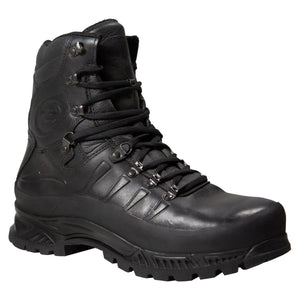
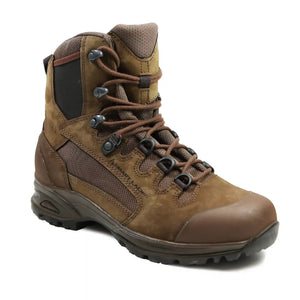
Premium brands such as Lowa, Haix or Meindl know how to combine functionality and wearing comfort with all the protective properties required for duty in a single duty boot. These combat boots are characterized by particularly robust materials that optimally protect police, military, and other personnel from external influences in all challenging situations. ASMC’s range is extensive and includes a wide selection of duty boots from premium brands that have proven themselves over many years in tough everyday service and have safely accompanied users through their missions.
The deployment locations of military or police units are constantly changing. All the more important, then, that the right duty boots provide the necessary sure-footedness on any terrain and do not let the wearer down away from paved paths. Combat boots are equipped with special soles and tread patterns that ensure particularly secure footing, so you have good grip even on wet surfaces and don’t slip. With this in mind, ASMC has carefully selected the combat boots in its range: all duty boots are designed to optimally stabilize the foot and effectively prevent injuries caused by twisting or slipping. To prevent the wearer from twisting an ankle and suffering serious injuries, combat boots are usually cut a little higher to optimally stabilize the foot at ankle height. ASMC duty boots have proven themselves in a wide variety of terrain and have safely accompanied users through many different operational environments.
Nothing is left to be desired here! The duty boots from premium brands such as Haix, Lowa or Hanwag are deliberately designed to provide maximum functionality and protection in any terrain without compromising on comfort. Years of development work go into this: many manufacturers design their combat boots in cooperation with military and police special units in order to respond optimally to the specific needs of everyday duty. The special soles used for these boots allow fatigue-free rolling even on long marches and make it easier for the wearer to cover long distances. Even during operations lasting several hours, the duty boots do not pinch anywhere and cushion your weight optimally with every step. So that the combat boots can be worn all year round, they reliably withstand both moisture and extreme heat. The climate-regulating properties of the materials used keep your feet permanently dry. The combat boots from ASMC meet all the comfort requirements placed on a modern duty boot: breathability and durability are aspects on which the manufacturers of these premium boots make no compromises. The combination of the above-mentioned properties makes these duty boots the ideal companion throughout the entire working year.
Military boots are a special type of duty boot. They provide solutions for very specific challenges and deployment scenarios that can arise in the military sector. Military boots integrate advanced technologies and materials tailored to particular operational conditions. These include, for example, thermal insulation for extreme temperatures, special coatings for improved camouflage properties, as well as enhanced protection against chemical or biological hazards. Military boots can also be equipped with modular systems that allow rapid adaptation to changing mission conditions. This can include swapping insoles, adjusting protective components or integrating communication technology. Since military operations are often prolonged and physically demanding, military boots place particular emphasis on long-term wearing comfort and reducing fatigue. This includes duty boots with effective cushioning systems, ergonomically shaped footbeds and breathable materials that ensure an optimal foot climate even during extended missions.
With the right lacing technique, you can avoid many problems with your new duty boots from the outset: often the heel is narrower than the heel box, which frequently leads to issues. In this case, the foot lifts up with every step. With boots that have so-called “deep-draw hooks”, you can improve the heel fit using a pulley lacing: thread the laces of your combat boots through both deep-draw hooks. Then run the opposite lace ends underneath this deep-draw connection. By pulling both laces tight, your foot is pressed into the heel box. Finally, you can lace the duty boot crosswise as usual. If the pressure is on the instep (“top of the foot”), it is advisable to thread the laces at the height of the pressure point through two eyelets on the same side instead of crossing them. This allows the combat boot to widen at that point.
For optimal walking comfort, it’s advisable to buy combat boots slightly larger rather than too small. There should be about 1 cm of space at the toes so that your feet don’t bump the front when walking downhill or standing.
Since feet generally swell somewhat during the day, combat boots should mainly be bought or tried on in the evening. This is the best way to determine the right size for your new duty boots. To make sure the combat boots don’t pinch in use, it’s advisable to wear the same socks during fitting that you’ll use later in everyday wear.
One of the most important aspects should be the sole construction, because only you can match this to the specific area of use. There is no universal all‑round solution. Size also naturally plays a role. The shoes should not be too small in order to avoid pressure points and blisters. In addition, you will usually be wearing somewhat thicker hiking socks, which also require a bit more room. For boots in the security sector, suitability for long hikes is of course less important than the stability of the entire boot structure and the sole. Depending on the area of use, it is crucial not to slip under any circumstances and to keep any moisture away from your feet.
A lightweight boot saves muscle power. It is a safety advantage if you can still place your feet precisely after a strenuous tour. High walking comfort and good rolling characteristics provide security. A softly padded shaft gives the ankle joint plenty of freedom and allows safe movement even on steep descents. You should choose your footwear according to the type of tours you usually do.
This is – unfortunately not standardized – information on how much the sole can withstand in terms of penetration by foreign objects. For example, if you step on a nail, a puncture-resistant sole is of course very helpful. However, this is usually the case with true safety footwear, i.e. work shoes. These are often also equipped as standard with steel toe caps to protect against forces acting from above.


Shipping to Almost Everywhere
Shipped to you within 1–2 business days

Completely risk-free
Top reviews, certified shop & 31-day satisfaction guarantee

Pay flexibly
Pay securely and flexibly with PayPal and more

Loyalty is rewarded
In the ASMC Prime League, you'll receive attractive discounts
Pay securely with:


Secure shipping with:


