







Compass M-9
33,61 €


Scout compass with plastic housing
Every compass shows the direction north directly with its needle and provides new orientation within a second. Electronic variants differ from this, for example those that are part of a GPS system and therefore first have to be activated as a function. Determining your position with these methods can sometimes take significantly longer. Since a compass should always be ready to hand, it is advisable to purchase an additional pouch for easier use. This can be attached to your belt, for example, and, with a camouflage look or plain design, can be matched to the intended use.
Anyone who wants to be able to look at their compass at any time without explicitly holding it in their hand should use a wrist version. This is not only part of many modern digital watches, but can also be worn on the wrist as a standalone aid without a watch.
The most important criterion when buying a good compass is its intended use. Anyone using a GPS-based navigation device, for example for hiking or geocaching, may be able to do without a separate compass. Without electronic equipment, however, the classic compass as an essential tool for orientation should be easy to handle and immediately readable, which also speaks in favor of carrying it directly on the body or stowing it safely in your luggage.
For night hikes in military environments or with scouts, compasses with integrated lighting are the right choice. Many models of this type now rely on discreet LED lighting, which is very economical and durable. For authentic navigation with the finest nuances of direction, the use of analog compasses is also recommended, while compasses in electronic devices offer a more or less fine digital scale.
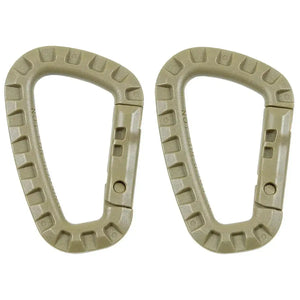
Whether the compass is worn on the wrist or attached to a carabiner or carried in a separate pouch again depends on the intended use and personal preference. For all these options, ASMC offers not only the right compass but also the appropriate mounting accessories.
The simplest method for areas in the Northern Hemisphere is to make use of nature. But even then you have a number of options. We’ll introduce a few tips. A method of determining direction without (technical aids) that became widely known not only through the Game of Thrones books is to take a closer look at the growth on trees. On one side of the trunk, trees usually have more moss and lichen, which indicates the shadier and therefore more humid side of the tree. In addition, there are usually fewer branches on the same side, which are two indicators of the north side. The easiest way to check the number of branches is to look up along the trunk from below. Of course, moss is harder or impossible to see in winter, which is where another tip comes in: snow melts away sooner on the southern side than on the northern side. In addition to orienting yourself using nature, it is advisable to carry a radio. In situations where natural clues are unclear, the radio provides a reliable means of communication, whether for coordination within a group or for contacting the emergency control centre if you lose your bearings.
Such a device measures the north direction using the Earth’s magnetic field. A needle mounted as freely as possible aligns itself northwards due to the Earth’s magnetic field.
Whether you’re hiking, running, cycling, skiing off‑piste, canoeing, or sailing: to determine the cardinal directions in unfamiliar terrain, the compass is the tool of choice for orientation on outdoor adventures. Its biggest advantage over modern GPS devices is, of course, its independence from a power source. On a weekend trip this may not matter much, but on a world trip or a longer break (sabbatical), it can be a decisive factor. You usually also need a (hiking) map, on which you can find your way more easily with the help of the compass. Speaking of which, you can find a good collection of map‑reading tips here: http://www.kompass.de/magazin/kartenlesen.html
There are models adapted to specific conditions, but for most purposes a simple sighting or marching compass should be sufficient. Then there are digital compasses, so-called electronic fluxgate models. However, several factors come into play here that make them more difficult to use, and of course they depend on a power source. Compasses are also popular as underwater navigation devices.
You may remember this from childhood, with the compasses you were often given as presents: you just can’t hold it completely still. But that has nothing to do with too much coffee or the like; it’s due to the natural body tremor that everyone has. Unfortunately, this quickly sets a compass needle swinging. The solution is, of course, a model with a damped and properly mounted needle.
First you should determine what you want to use such a device for – both now and in the future – and how much money you are willing to spend on it. In addition, as mentioned above, it is important to know on which hemisphere of the Earth – northern or southern – you will be using the compass, as you will need to choose different models for this (keyword “global system”). There are also sports watches with a built-in compass. If you only need a compass now and then and are, for example, already an avid runner, this may be a good solution.
There are various explanations for this (for example in astronomy), but in the case of commercial compasses it refers to how many degrees the deviation from true north amounts to. South, for example, would have an azimuth of 180°, with the angle measured clockwise.


Shipping to Almost Everywhere
Shipped to you within 1–2 business days

Completely risk-free
Top reviews, certified shop & 31-day satisfaction guarantee

Pay flexibly
Pay securely and flexibly with PayPal and more

Loyalty is rewarded
In the ASMC Prime League, you'll receive attractive discounts
Pay securely with:


Secure shipping with:


