












































Login
Your benefits:
- Du sammelst mit jeder Aktivität XPs. Gear up und erreiche den nächsten Rang!
- Übersicht über Deine Bestellungen und den aktuellen Bestellstatus
- Schnelle & komfortable Bestellung


Whether leisurely walks through flat landscapes or demanding tours in high mountains – choosing the right hiking boot is crucial for comfort and safety. But how do hiking and trekking boots differ, and when is each model the best choice?
Hiking shoes are generally lighter, more flexible, and have a softer sole. They’re ideal for day hikes on well-maintained trails or easy terrain. Their low weight makes them comfortable to wear, but they offer less stability and protection than heavier models.
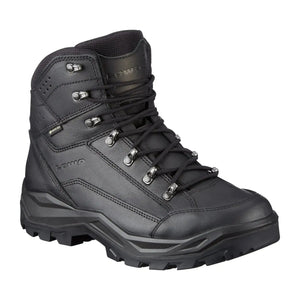
Trekking shoes and trekking boots are more robust, with a harder, grippier sole and a higher shaft. They’re designed for longer tours with heavy packs or rough terrain, provide better support, and protect the ankle from twisting. However, they are heavier and less flexible, which can make them a bit less comfortable on easy trails.
A low-cut shoe, such as a trail running or light hiking shoe, offers more freedom of movement and is particularly suitable for sporty hikes or fast movement on paved paths. It ensures good ventilation and low weight, but with limited protection for the ankles.
A high-cut shoe, such as a trekking or mountain boot, stabilizes the ankle and protects against twisting. It’s ideal for uneven terrain, long tours with a heavy backpack, or demanding mountain hikes. However, a high shaft can initially be stiffer and require more time to break in.
Here’s an overview of the best types of shoes for different terrain and ground conditions:
Flat landscapes place few demands on footwear, as the paths are usually well maintained and easy to walk. However, soft ground such as sand or meadows can create additional resistance, which is why flexible and lightweight shoes are the best choice here.
Shoe type: Lightweight hiking shoes or trail running shoes
Advantages: Low weight, high flexibility, comfortable to wear
Disadvantages: Less support and stability, less protection from moisture and sharp stones
Recommended for: Day hikes, walks, well-developed trails
In hilly terrain, ascents and descents alternate, requiring a good balance between mobility and stability. Uneven ground and changing surfaces such as forest floors or meadow paths may require additional grip.
Type of footwear: Hiking boots with a mid-height shaft
Advantages: Better stability than low-cut shoes, moderate ankle protection, good cushioning
Disadvantages: Heavier than trail running shoes, less protection than mountaineering boots
Recommended for: Easy to moderately difficult hikes on forest and meadow trails
Here, gravel, roots and muddy sections can make footing more difficult. Shoes for this terrain should have a non-slip, grippy sole and a robust construction to ensure stability and protection.
Shoe type: Sturdy hiking shoes or light trekking boots
Advantages: Good grip, protection against twisting, durable sole
Disadvantages: Slightly heavier than classic hiking shoes, less flexible than trail running shoes
Recommended for: Hikes on unpaved trails, rooty and gravel paths
Steep climbs, loose scree and uneven terrain are typical of mountain regions. Here, sturdy shoes with a grippy sole are essential to provide traction on different surfaces and protect the ankle from twisting.
Shoe type: High-cut trekking boots
Advantages: High stability, good ankle protection, grippy sole with deep tread
Disadvantages: Heavier weight, less mobility
Recommended for: Multi-day hikes, demanding mountain tours
The choice of the right hiking boot strongly depends on the planned tour. If you spend a lot of time on easy trails, you’ll benefit from lightweight shoes, while demanding mountain tours require a stable boot. For soldiers, the right choice is also essential, as deployments often take place in changing terrain. Also pay attention to the fit to avoid blisters and pressure points. With the right footwear, nothing stands in the way of your outdoor adventure!
You can find our entire range of hiking shoes and boots here:
Pay securely with:


Secure shipping with:


