






































Login
Your benefits:
- Du sammelst mit jeder Aktivität XPs. Gear up und erreiche den nächsten Rang!
- Übersicht über Deine Bestellungen und den aktuellen Bestellstatus
- Schnelle & komfortable Bestellung


In everyday language, these terms are often used as synonyms. At their core they probably mean the same thing, but they differ in terms of equipment and route planning.
If the terms are used correctly, hiking refers to a longer walk in nature. It doesn’t matter whether you hike across meadows and fields, stroll through the forest or amble along a riverside promenade. The level of difficulty when hiking is very low, and it doesn’t require extensive equipment to do this activity. On well-marked trails and mostly firm ground, you can make progress without much effort and without aids such as trekking poles or off-road footwear.
In contrast, trekking requires more extensive planning for a successful tour. This applies both to the equipment you need and to the more detailed route planning in sometimes difficult terrain. Trekking usually involves covering long distances over several days, with various overnight stops along the way. In addition, trekking differs in terms of the landscapes you pass through compared to those you encounter when hiking. Here, the routes lead through unspoiled nature far from civilization and demand particularly sure footing on mostly unpaved ground.
To add even more confusion, we’ll also throw the terms mountain hiking and walking into the mix. The latter is essentially a combination of strolling, hiking and jogging. Here the focus is on health, enabling you to achieve a high level of vitality and well-being through plenty of exercise and fresh air. In contrast to classic trekking or hiking, only short distances on paved ground are covered.
An intensification of trekking is mountain hiking, where you are sometimes in high-alpine terrain. To complete these tours unscathed, a high degree of surefootedness and a head for heights is required. The sections on mountain hikes are extremely demanding and characterized by many meters of elevation. To successfully master the challenges on your tour, good fitness and a sense of direction are almost indispensable for mountain hiking.
With these brief definitions of the individual terms, it should be easier for you in future to find your equipment. After all, your gear differs from tour to tour, so you should definitely prepare for the right kind of adventure. What they all have in common is their connection to nature – regardless of the level of difficulty or how long the tour actually is!
As already mentioned in the previous section, the terms hiking, trekking, walking and the like are not interchangeable. So to make sure you take the right gear with you for your adventure, it’s important that you first know exactly what your tour will look like. After that you can consult our packing list here and prepare optimally for your next adventure.
To ensure you’re optimally equipped for every situation, we divide our packing list into several sections. Here you’ll find, on the one hand, the basic gear that’s important for all of the activities mentioned above. If you’re planning an extended trekking tour over several days, you’ll need to supplement this equipment with additional overnight gear. We’ve compiled that for you here as well. And to make sure you’re also optimally prepared for mountain hiking, you’ll of course find a number of key items for that in our packing list too.
A very important note at this point: our packing list is only a small guide for you! Depending on the tour and your needs, you will of course require additional equipment that you should add to your kit accordingly :-)
For a day trip, your gear doesn’t need to be overly extensive. Below, we’ll list the most important items that absolutely belong in your basic kit for hiking or trekking.
Depending on the region, the weather can change within a very short time. This makes it all the more important that you always have the right gear in your backpack when hiking. What should be in your pack on every tour is a good rain jacket or poncho. To ensure your legs are also optimally protected from moisture, we recommend packing a robust pair of rain pants for trekking.
To ensure you’re as well protected as possible even on windy days, we recommend a windbreaker or a softshell jacket. Both contribute to a pleasant body climate by transporting excess heat and moisture to the outside. They provide good breathability when hiking while at the same time preventing drafts from penetrating.
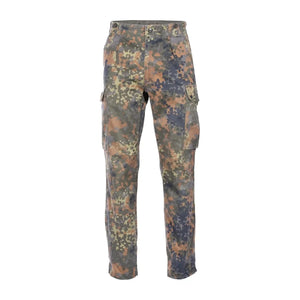
To react quickly to sudden changes in weather and temperature, zip-off trousers are also recommended for hiking. Thanks to their zips, long trousers can be converted into shorts in no time.
Depending on the weather, gloves and headgear are of course also an important part of your trekking gear. A lot of heat is lost from exactly these parts of the body, so these accessories can effectively prevent you from cooling down.
Of course, you also cool down if moisture from strenuous activities is not wicked away from the skin. It is therefore all the more important that you make the right choice when it comes to functional underwear. Blended fabrics made from natural fibers and elastane have proven particularly effective here. They are highly breathable and help transport sweat away from the skin to the outside. Pure natural fibers are also excellent as functional clothing for trekking or hiking. Merino wool, for example, can absorb up to 30% of its own weight in moisture without feeling wet. The brands Icebreaker and Woolpower have become especially established here; their functional underwear is an important part of many hikers’ gear. At this link we’ve put together our top sellers in this category so you can start your next adventure well equipped!
The right footwear is certainly the most important part of your trekking or hiking equipment. Here, not only the correct size matters, but also the right properties of the sole!
Before buying boots, you should first think about what kind of terrain you’ll be hiking in. For paved trails in low mountain ranges you obviously need different boots than for a ridge hike in high alpine terrain.
So that you have optimal grip even in rough terrain, the shoe tread is a crucial factor. In addition, good cushioning in the shoes supports you while hiking and ensures a fatigue-free roll-through on long marches.
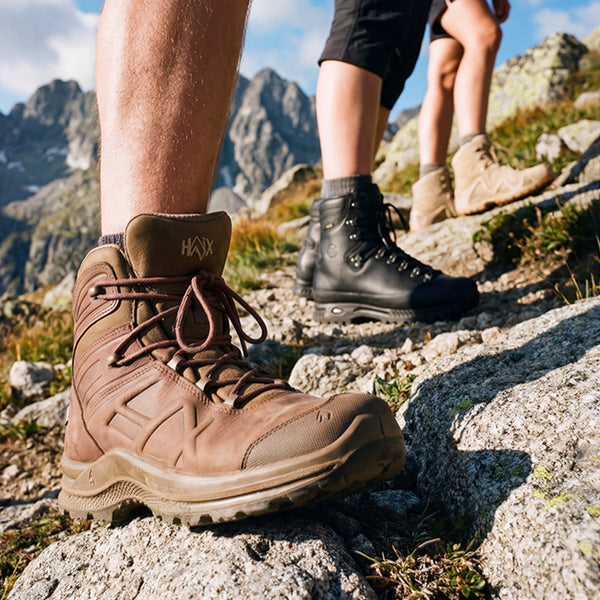
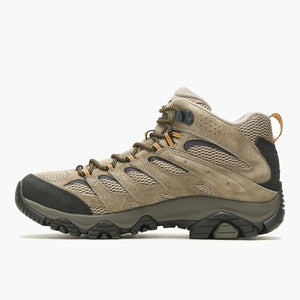
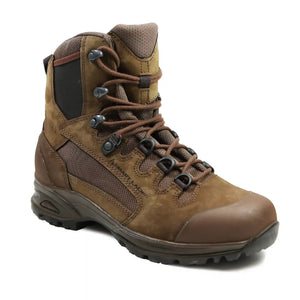
To protect you and your feet as best as possible, we strongly recommend ankle-high boots. These prevent you from twisting your ankle and give you better support on unpaved trails. Ideally, you should also look for shoes with a scree guard. This gives you additional safety and protects you from falling rocks.
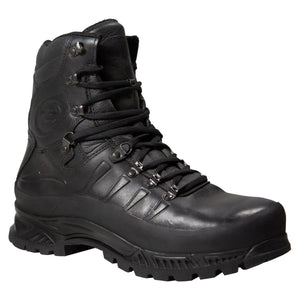
In our mountaineering boots or trekking boots category, you’ll find proven models from our top brands. These have proven themselves in difficult terrain and have accompanied many hikers on their tours. In addition, some of these boots have also proven themselves in military use. There they are worn, among others, by mountain infantry and are tested to the limit in the field.
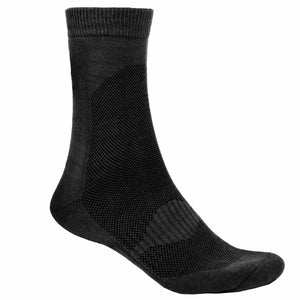
A good boot sock is, of course, part of a proper hiking boot! Here, too, you should be prepared to spend a little more so that you can enjoy your socks for a long time. They not only contribute significantly to a pleasant foot climate, but also help prevent pressure points and blisters. The top sellers in our range are the boot socks from DarnTough, which are also worn by the US military, among others. They fit like a second skin and prevent unwanted friction or pressure points. See for yourself! :-)
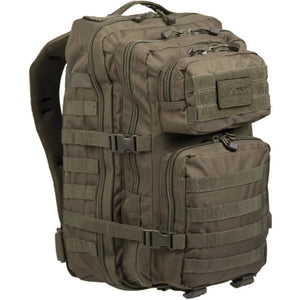
As a daypack, we recommend a backpack with a capacity of around 20 to 30 liters. You should also carry a suitable rain cover with you so that your gear is optimally protected. We recommend a backpack with hip and chest straps. These help you redistribute the load from your shoulders.
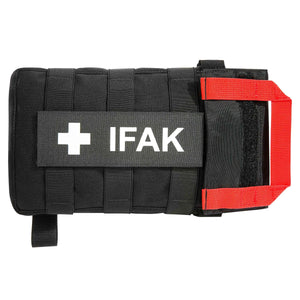
No matter how long your tour lasts or what kind of terrain you’re crossing: this belongs in every kit! A slippery path or loose scree can quickly cause you to fall and injure yourself. To ensure fast wound care, you should have at least a small first aid kit in your backpack!
These should not be missing from your gear either! It’s easy to get lost and be caught out by darkness. That’s why a good light, including the necessary batteries or rechargeable cells, is indispensable. Whether a handy flashlight or a powerful headlamp – you’ll definitely find what you need here!
One point we certainly don’t need to elaborate on: you must not run out of water! Since supplies also add a fair amount of weight to your pack, we’d like to point out a few practical alternatives here. If you have our chlorine tablets and water purifiers with you, you can produce clean drinking water almost anywhere. This not only reduces the weight of your gear many times over, but also ensures that you won’t die of thirst. A practical gadget here is our BeFree water bottle from Katadyn. It contains a water filter and provides freshly treated drinking water on the go!
So that you always know exactly where you are and where you want to go, these useful helpers should not be missing from your gear! You’ll also find several models in our range that support you effectively with navigation!
Whether for carving or cutting fruit – these two pieces of gear also belong on your packing list. The advantage of a multitool over a classic pocket knife is the number of tools. With it, you get all the useful helpers in a single product and are optimally prepared for any challenge. You can get an overview of our multitools via this link. If you want to upgrade your equipment with a classic pocket knife, you’ll find our favorites here.
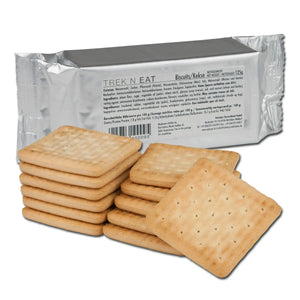
As a small snack in between, you should of course also have enough provisions in your pack. Whether freeze-dried meals or wet rations – we definitely recommend using non-perishable foods. Energy bars also provide the necessary boost on your tours and should definitely be part of your gear. In our outdoor food category you’ll find plenty of food for trekking. From EPAs to bars and biscuits to nutritional supplements, there’s something for every need!
Depending on the type of shelter, it may also be advisable to carry a stove. We have also put together an overview in our stove category and provided you with many practical tips to help you choose the right one for you. Accordingly, a fire starter or Zippo is of course also part of your gear, allowing you to create an effective source of light and warmth within a short time.
With these pieces of equipment we would like to complete the basic kit. Of course, this can be expanded as desired depending on space and needs and serves only as a guide to the most important items.
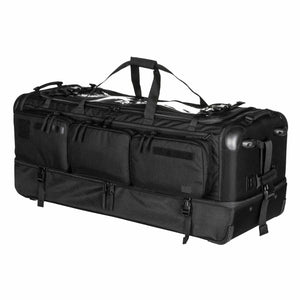
However, if you are going on a longer trekking tour and also want to spend the night outdoors, you’ll need additional equipment to take with you. In this case, you should of course opt for a larger backpack. We recommend a backpack with a capacity of around 50–60 litres, which offers enough space to stow all your gear.
As we’ve already mentioned, trekking in turn differs from mountaineering. The latter usually involves hiking through rough terrain in high mountain regions. This requires more extensive equipment that reliably protects you even on demanding sections.
For example, crampons or an ice axe are also required here. In addition, reliable climbing equipment including harness and safety rope is an important aid on your tour. Depending on the weather and surroundings, we also recommend a certified glacier glasses to protect your eyes. We emphasise “certified” quite deliberately here so that you pay attention to good quality! After all, this is about protecting your most important sensory organ, which could be seriously damaged by the extreme brightness on the glacier!
As wonderful as it may be to enjoy the peace and your connection to nature alone, we still advise against undertaking high‑alpine tours on your own! Sudden weather changes, difficult terrain and lack of experience are often decisive risk factors that many mountain hikers fail to account for. Carrying good, comprehensive gear will certainly help you overcome one challenge or another. Nevertheless, we’d like to point out that a good hiking partner also belongs at your side. You can share beautiful moments with them and handle difficult situations more easily :-)
To ensure you are optimally protected on your tours, you shouldn’t skimp on quality! Even if you usually have to dig a little deeper into your pocket, you’ll enjoy your gear for much longer.
One of the most popular brands in the hiking and trekking sector is our premium manufacturer Tatonka. The pros from Dasing know exactly what matters in robust outdoor gear and have been delighting countless trekkers on their tours for many years. In addition to backpacks, bags and more, this brand’s range also includes plenty of weatherproof clothing that reliably protects you in any weather. Tatonka also offers a wide selection of rugged outdoor tableware and other practical travel accessories. You’ll find an overview of the manufacturer’s top products in our range in the Tatonka brand shop at this link!
The products from Ortlieb have also convinced numerous hikers! The dry bags and stuff sacks reliably protect the contents from dust and moisture, so your equipment is optimally protected against adverse weather conditions. We have put together an overview of our Ortlieb products for you here so that you are well equipped for your next adventure!
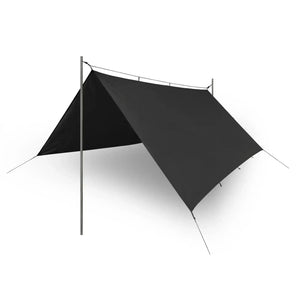
If you like to relax in a hammock while trekking, you should definitely take a look at our Amazonas brand shop! The manufacturer’s products are ultra-comfortable and, thanks to their small pack size, can be stowed in virtually any backpack. To match the hammocks, you’ll also find plenty of tarps in our Amazonas brand shop, so you’re well prepared for any weather!
For those who don’t find a hammock comfortable enough to sleep in, we naturally also have plenty of tents, sleeping mats and camp beds in our range. With products from our premium brands Nordisk, Grand Canyon and High Peak, you’ll be perfectly equipped for nights in the great outdoors.
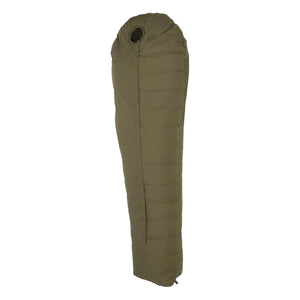
Of course, we also place great value on robust material quality for our sleeping bags. In this area, we recommend, for example, the products of our top brands such as Snugpak or Carinthia. We have compiled a selection of our top sleeping bags for you at this link.
Of course, our portfolio includes many more manufacturers whose outdoor products stand for high quality. Whether multitools from Leatherman, stoves from Bushcraft Essentials or drinking bottles from Klean Kanteen – with the outdoor products from our range you’re perfectly equipped for any challenge! If you have any questions about our products, our customer service is always on hand with help and advice! With that in mind, we wish you lots of fun gearing up and exciting tours with your ASMC gear!
If you want to know how best to pack your backpack, feel free to check out our blog:
Besides the Allgäu, Saxon Switzerland is also particularly popular. We can also highly recommend a hiking holiday in the Harz or the Eifel. Which region is right for your next tour naturally depends very much on your wishes and interests.
Did you know that Germany also offers plenty of long-distance hiking trails that are ideal for trekking? The Goldsteig, for example, runs from the Upper Palatinate to the Czech border and offers you plenty of vistas over more than 660 kilometers. If you want to combine regional culture and history with nature on your trekking tour, we recommend the Jurasteig. This trail covers a total of 230 kilometers through one of the most spectacular landscapes in Europe’s low mountain ranges.
The sheer number of hiking routes often makes it hard to decide. With a love of nature and the right gear in your pack, you’re guaranteed not to go wrong and will always find the right tour for you!
Again, this question depends very much on your needs! If you’re planning a short hike on a paved trail, low-cut hiking shoes are perfectly adequate. If, on the other hand, you’ll be travelling in rough terrain, we recommend ankle-high boots with good tread! For greater safety when trekking, your boots should ideally also be equipped with a scree guard that protects your ankles from falling rocks and the like.
Good quality is reflected not only in functionality! In terms of service life as well, you simply enjoy high-quality products for longer! True to the motto “Buy cheap, buy twice,” you should also focus on robust brand products when it comes to your hiking gear. These will accompany you on your tours for a long time and, above all, won’t let you down when it comes to safety!
What could be worse than shoes that don’t give you any grip or a rain jacket that doesn’t keep you dry? Cheaper products often don’t deliver what they promise and, in the worst case, can even pose a safety risk. That’s why we strongly recommend that you rely on proven outdoor products from top brands such as Tatonka, Kelly Kettle and others.
We have already talked about the brands that are ideal for your trekking gear. If you need further information on this, you can contact our customer service at any time!


Shipping to Almost Everywhere
Shipped to you within 1–2 business days

Completely risk-free
Top reviews, certified shop & 31-day satisfaction guarantee

Pay flexibly
Pay securely and flexibly with PayPal and more

Loyalty is rewarded
In the ASMC Prime League, you'll receive attractive discounts
Pay securely with:


Secure shipping with: